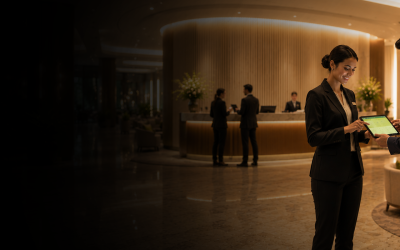
For years, hotel companies have spoken about the seamless guest journey. Yet for many guests, the journey still feels fragmented. They may discover a property on one channel, book on another, share preferences somewhere else, check in through an app, dine at the restaurant, raise a request through messaging, earn loyalty benefits through a separate platform and receive post-stay communication from yet another system.
To the guest, it is one stay. To the hotel, it is often a complex web of platforms, teams, processes and handoffs.
That gap is becoming harder to ignore. Travelers increasingly expect hotels to recognize context and respond with relevance. A 2025 Mews survey found that 68% of travelers say they are more likely to stay loyal to hotels that deliver standout, personalized experiences, showing how closely loyalty is now tied to the quality of the experience, rather than only points or rewards.
This is where Agentic AI can redefine what a frictionless guest journey means. The opportunity is to go beyond chatbots and use AI agents to understand guest intent, interpret context and orchestrate action across the hotel enterprise. In a #ZeroLag enterprise, this is the essence of Fluidity: systems, teams and touchpoints working together without making the guest or associate carry the burden of complexity.
From discovery to booking – understanding intent earlier
The guest journey begins well before arrival and with different expectations. A family planning a resort stay, a business traveler attending a conference and a couple looking for a wellness weekend are not shopping for the same experience, even if they are looking at the same hotel.
At the discovery and inspiration stage, AI agents can understand travel intent, purpose of stay, budget, loyalty status, preferences and contextual signals to help present the most relevant hotel, room type, package or experience.
As AI-led search and travel planning become more common, hotel content also needs to become easier for intelligent systems to understand. Room types, amenities, policies, packages, accessibility features, dining options, family services and local experiences must be structured clearly enough for both humans and AI agents to act on them.
At the shopping and booking stage, agents can connect central reservation systems, revenue management systems, customer data, loyalty profiles and offer engines to recommend a more relevant stay proposition. This could include early check-in, dining credits, spa packages, meeting support, family amenities or loyalty-linked benefits, depending on the guest’s context.
Pre-arrival – converting signals into action
The pre-arrival phase is where many hotels lose the thread. A guest may share arrival time, dietary needs, room preferences or a special occasion. Too often, those signals do not flow cleanly into operations. The guest arrives expecting recognition and meets disappointment.
Agentic AI can help convert pre-arrival intent into operational action. It can prioritize room readiness, alert housekeeping, inform the front office, coordinate amenities, check package inclusions and proactively communicate with the guest.
However, a truly fluid guest journey goes beyond internal operations. External environment such as flight delays, weather disruptions, local events, traffic conditions or conference schedule changes can all affect the stay. If a guest’s flight is cancelled, an agent should be able to detect the disruption, check availability, understand reservation context and initiate an approved communication: would the guest like to extend the stay for another night? Behind that simple message sits orchestration across availability, rate rules, housekeeping, loyalty, payment authorization and guest messaging.
This is where Agentic AI moves hospitality closer to service anticipation.
Arrival and stay – helping associates deliver better service
At arrival and check-in, a guest should not have to repeat preferences or wait while teams manually check status. Agents can bring together PMS, housekeeping, loyalty, payment, identity verification and guest messaging to help associates deliver a more confident and personalized welcome.
During the stay, the journey becomes more dynamic. Dining, housekeeping, engineering, concierge, spa, retail, transportation and service recovery all shape the experience. A request for extra towels, a restaurant booking, a room temperature complaint or an upgrade inquiry should not become a chain of manual calls and follow-ups.
Agents can classify the request, understand priority, trigger the right workflow, update the right system, notify the right team and close the loop with the guest. Associates remain central to the experience, especially in high-empathy moments. Agentic AI gives them better context and fewer manual steps.
This is how #ZeroLag starts to show up in the guest experience: less waiting, less repetition, fewer dropped requests and more confident service.
Closing the loop with checkout and post-stay engagement
At checkout, the opportunity is to reduce payment, billing and loyalty friction. Charges from room, dining, spa, retail and other services should come together accurately. Exceptions should be flagged early. Loyalty points, benefits and invoices should be handled with minimal guest effort.
Post-checkout should also be part of the journey. Agents can help interpret feedback, detect unresolved dissatisfaction, trigger service recovery, personalize future offers and capture insights that improve the next stay. A truly connected journey learns from every interaction.
The architecture beneath the experience
Ultimately, what the guest experiences as seamless service depends on the operations orchestration underneath. The hotel does not need every system to become one system. It needs the journey to behave like one connected experience.
Agentic AI allows hotels to move faster across systems and workflows. Agents can sit across processes, interpret signals, retrieve knowledge, trigger workflows and guide associates.
That requires trusted data, API-led integration across PMS, CRS, POS, RMS, CRM, loyalty and service platforms, event-driven workflows, real-time operational signals, external signals, identity and consent management, security guardrails and clear rules for when AI acts and when humans stay in control.
In many ways, the frictionless guest journey is only as strong as the invisible architecture beneath it. To know more about this architecture, read our whitepaper: https://www.itcinfotech.com/resource/whitepaper/zero-lag-hotel-enterprise-eliminating-operational-delays-to-boost-revenue-and-guest-experience/
Author:
Anu Joy,
VP and Industry Group Head for Hospitality
Recent Posts
 Data Modernization: The Missing Link Between Cloud and AI Value
 Beyond Code Generation: Where AI Creates Value Across the SDLC
 The Cloud Cost Reckoning: Why FinOps Must Move from Visibility to Accountability
 ZeroLag Manufacturing: The Connected Enterprise for Event Driven Decisions
 Securing Multi-Cloud in the Age of AI Complexity